
Overview
Take any changes in your pet’s eyes seriously. Some eye conditions are minor, but others can threaten sight or even lead to loss of the eye if left untreated. If your pet holds an eye closed, the eye looks cloudy or bloodshot, or there is unusual discharge, contact a vet promptly.
Your vet may prescribe eye drops for an infection, scratch or ulcer as part of a treatment plan. Some pets tolerate drops well; others find them stressful. These steps can help make treatment easier for you and your pet.
Give prescribed pain relief as directed
Your vet may prescribe pain relief, particularly for a painful eye condition. This may be a tablet or liquid medication. Give it exactly as directed.
The timing depends on the medication, so ask your vet when to give it in relation to the eye drops. Where the prescribed schedule allows, giving pain relief before handling the eye can help make your pet more comfortable.
Gently clean away discharge
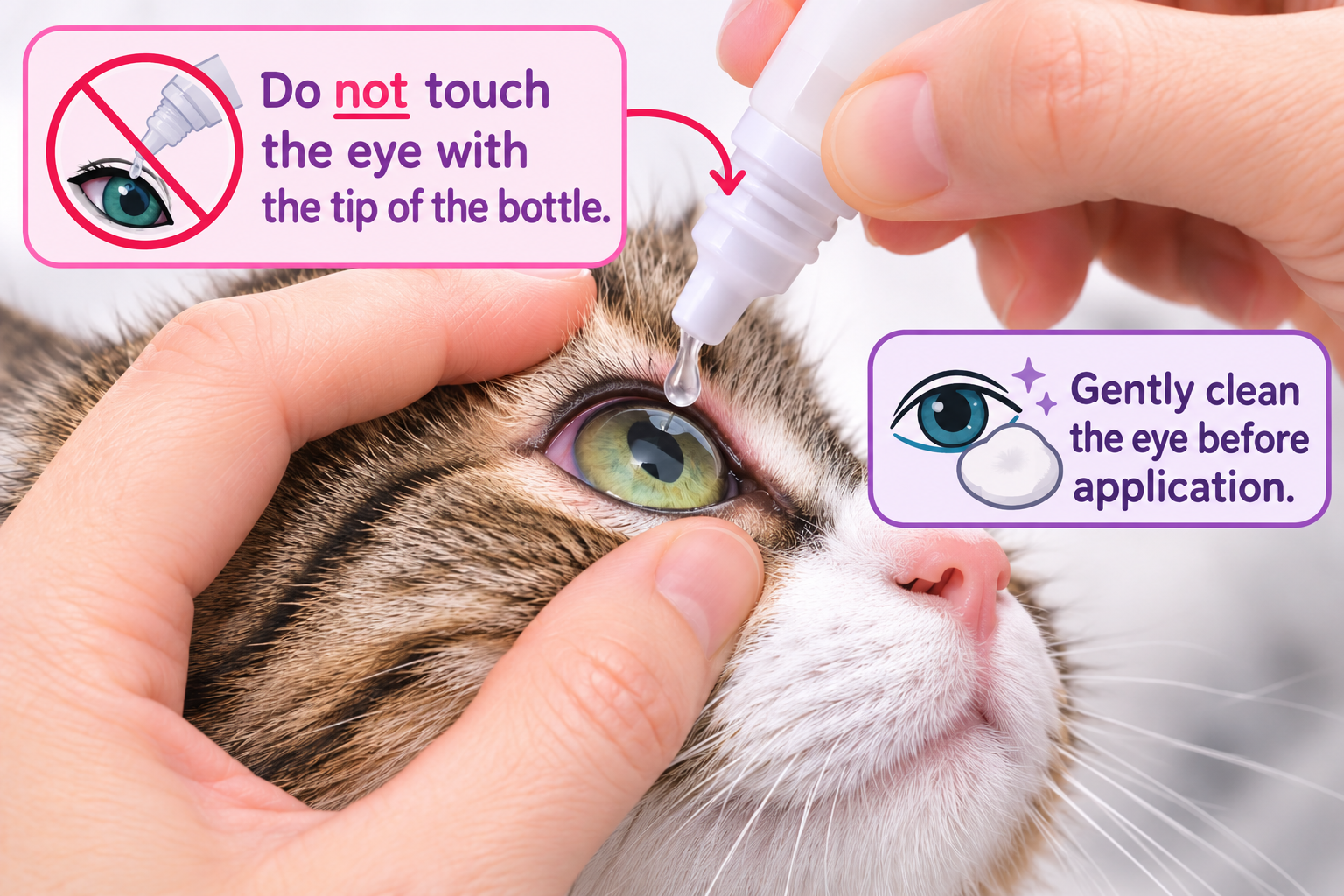
Wash your hands before handling the medication. Use a clean, damp cotton wool pad or soft flannel to gently wipe discharge from around the eye. Avoid applying pressure, as this could be painful.
Apply the prescribed drops
If needed, ask someone to help keep your pet still. A towel wrap can help with some small dogs and cats; ask your vet or nurse to show you a comfortable way to do this if you are unsure.
Carefully hold the eyelids open and apply the prescribed number of drops onto the eye, following your vet’s instructions. Do not touch the eye with the bottle tip. Allow your pet to blink a few times to spread the drops over the surface.
If the medication must be refrigerated, briefly holding the bottle in your hands before use may make application more comfortable. Always follow its storage instructions and return refrigerated medication to the fridge after use. Ask your vet if you are unsure.
Give the drops at the correct times
Follow your vet’s instructions carefully. Drops may need to be applied several times a day; spread the doses as evenly as the prescribed schedule allows.
If more than one eye medication has been prescribed, ask your vet or veterinary nurse how long to leave between them and which to give first.
Make it a positive experience
Give your pet plenty of praise and a suitable treat after applying the drops. You can also reward them before and during treatment to help them associate it with something positive. This may make the next dose easier.
Attend your follow-up appointment
Follow-up checks are particularly important for conditions such as eye ulcers or dry eye, so your vet can check that treatment is working. Treatment may need to be changed or extended if the condition has not resolved.
What to do if you are struggling
Let your vet or veterinary nurse know if applying drops is difficult. They may be able to discuss a different formulation, review prescribed pain relief or suggest ways to help your pet feel calmer. The team may also be able to arrange appointments to help administer treatment.
Treating eye conditions promptly and correctly is important. Do not stop treatment early simply because it is difficult or stressful: contact your vet for help. If you cannot safely give a dose, or the eye becomes more painful or worse, seek advice promptly.
Check the evidence
Sources & further reading
Find more information in these resources.