
Overview
Feeding a healthy diet is one of the most important things you can do for your rabbit.
Feeding the right balance of hay, fresh greens and a small amount of pellets will help keep their digestive system healthy, maintain good dental health and prevent obesity.
Variety in your rabbit’s diet is great but make sure to introduce new foods gradually and in small amounts.
So, what should you be feeding your rabbit?
Hay, hay and more hay!
Hay or fresh grass should make up around 85% of your rabbit’s diet. It provides essential fibre to keep their digestive system working properly and helps wear down their continuously growing teeth.
Your rabbit should have unlimited access to good-quality, dust-free feeding hay. As a rough guide, provide a bundle of hay at least as big as your rabbit every day, replenishing it regularly so they never run out.
Keep pellets to a minimum
Pellets should make up only a small part of your rabbit’s diet. They only need around 15g of rabbit pellets per kilogram of body weight daily. Feeding too many pellets can mean your rabbit eats less hay, and this can cause dental issues and poor gut health.
Do not feed muesli-style rabbit foods, as these can encourage selective feeding and nutritional imbalances.
Offer plenty of leafy greens and herbs
Fresh leafy greens, vegetables and herbs should make up around 10% of the diet.
Good choices include:
- Cabbage and spring greens.
- Rocket, watercress and romaine lettuce (avoid iceberg lettuce).
- Soft herbs like coriander, basil and mint.
- Woody herbs like rosemary and sage.
- Broccoli leaves, stalks and florets.
- Cauliflower leaves.
Why not grow your rabbit their own herb garden as a fun and easy way to add variety to their diet?
Always check that plants are safe for rabbits before feeding them.
Minimise fruit and sugary vegetables
Fruit and high-sugar vegetables should only be given occasionally and in small amounts as they can contribute to weight gain.
Carrots, apples, bananas and berries are examples of foods that should be treated as occasional extras rather than everyday foods.
Be careful with treats
Many commercially available rabbit treats contain unnecessary sugar, starch and calories. Avoid yoghurt drops, honey sticks and sugary cereal-based treats.
If you want to reward your rabbit, try offering a small piece of their favourite safe herb or a few pellets taken from their daily allowance instead.
Don’t forget fresh water!
Always provide access to clean water, ideally from a bowl rather than a bottle. If your rabbit lives outside, make sure to check their water bowl a couple of times a day during cold weather to ensure it has not frozen.
Monitor for any changes in their eating habits
Any changes to a rabbit’s eating habits or their stools should ring alarm bells and you should contact your vet. If they stop eating, this is an emergency and you must contact your vet for an appointment that same day.
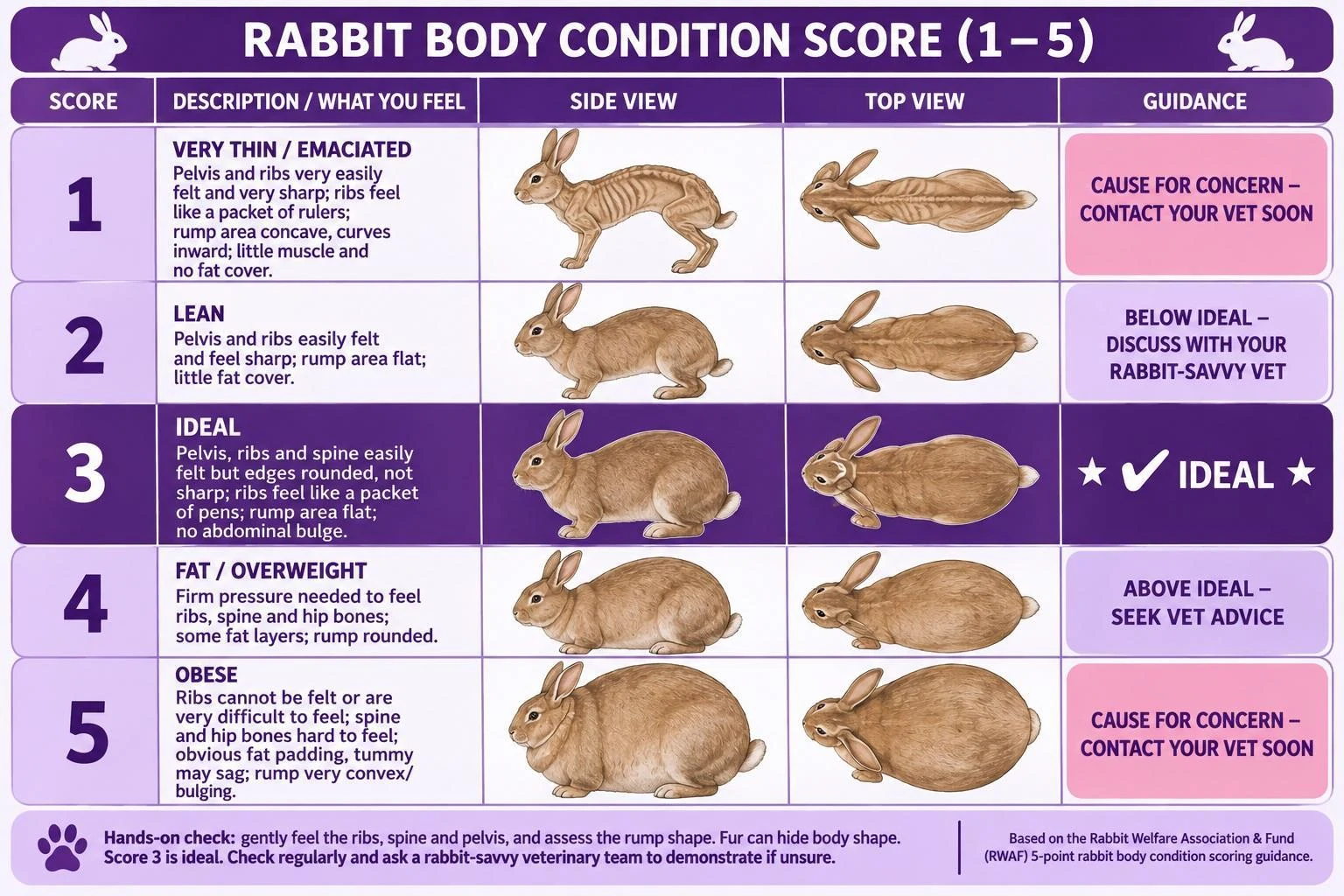
If you’re unsure about your rabbit’s weight or dietary requirements, speak to your vet or vet nurse for advice.
Check out our guide on assessing your rabbit’s weight.